Router Bit Guide: Types, Uses and How to Choose the Right Bit
Router bits can look deceptively similar, but the profile, cutting geometry, bearing position and dimensions can completely change the job a cutter is designed to do. Choosing the right type can make routing easier, improve the finish and help you avoid buying a cutter that does not suit your router or application.
This guide covers the common router bit families used for straight cuts, trimming, rebates, chamfers, rounded edges, decorative profiles, grooves and joinery. It is a practical starting point for cabinetmakers, joiners, furniture makers, shopfitters, school workshops and other users working with timber, board, laminates and other compatible materials.
Originally published January 2020. Substantially updated September 2026.
Quick answer
Start by identifying the cut you need to make. Straight bits cut grooves and straight-sided recesses; flush trim bits follow an edge or template; rebating bits create a stepped recess; chamfer bits create a bevel; rounding-over and profile bits shape an edge. Then check the material, shank and collet compatibility, cutter dimensions and whether the job requires a bearing, fence or template.
Safety first
Always follow the instructions and operating limits supplied with your router and cutter. Isolate or disconnect the machine before fitting or changing a bit, use the correct collet for the shank, secure the workpiece and use suitable guarding, extraction and personal protective equipment for the material and task.
Choose a router bit by the cut you need
It is usually easier to choose a router bit by working backwards from the result you want rather than starting with a catalogue of cutter shapes.
| What do you need to do? |
Start with |
Typical applications |
| Cut a straight groove, slot or recess |
Straight or spiral bit |
Grooves, dados, mortices, recesses and general routing |
| Trim one edge exactly to another edge or template |
Flush trim bit |
Laminate trimming, template work and copying shapes |
| Cut a step or shoulder along an edge |
Rebating bit |
Picture frames, cabinet backs, box work and edge recesses |
| Create a bevel on an edge |
Chamfer bit |
Bevelled edges, decorative detailing and easing corners |
| Round a sharp square edge |
Rounding-over bit |
Furniture, shelving, cabinetry and general edge finishing |
| Create a decorative edge or moulding |
Edge or face-forming bit |
Profiles, mouldings, furniture and architectural details |
| Machine a purpose-designed joint |
Joining bit |
Finger joints, tongue and groove, mitre locks and other joints |
What parts of a router bit matter?
Before comparing individual cutter profiles, it helps to understand the specifications that affect whether a bit will fit your machine and produce the cut you need.
Shank diameter
The shank is the section held by the router collet. The shank and collet must be compatible with your machine.
Cutting diameter
This helps determine the width or overall size of the cut. Do not assume similar-looking bits have the same dimensions.
Cutting length and profile
These determine how much of the workpiece can be engaged and the shape left by the cutter.
Guide bearing
Where fitted, a bearing can follow an edge or template and control the cutter's relationship to that reference surface.
Common router bit types
Straight bits
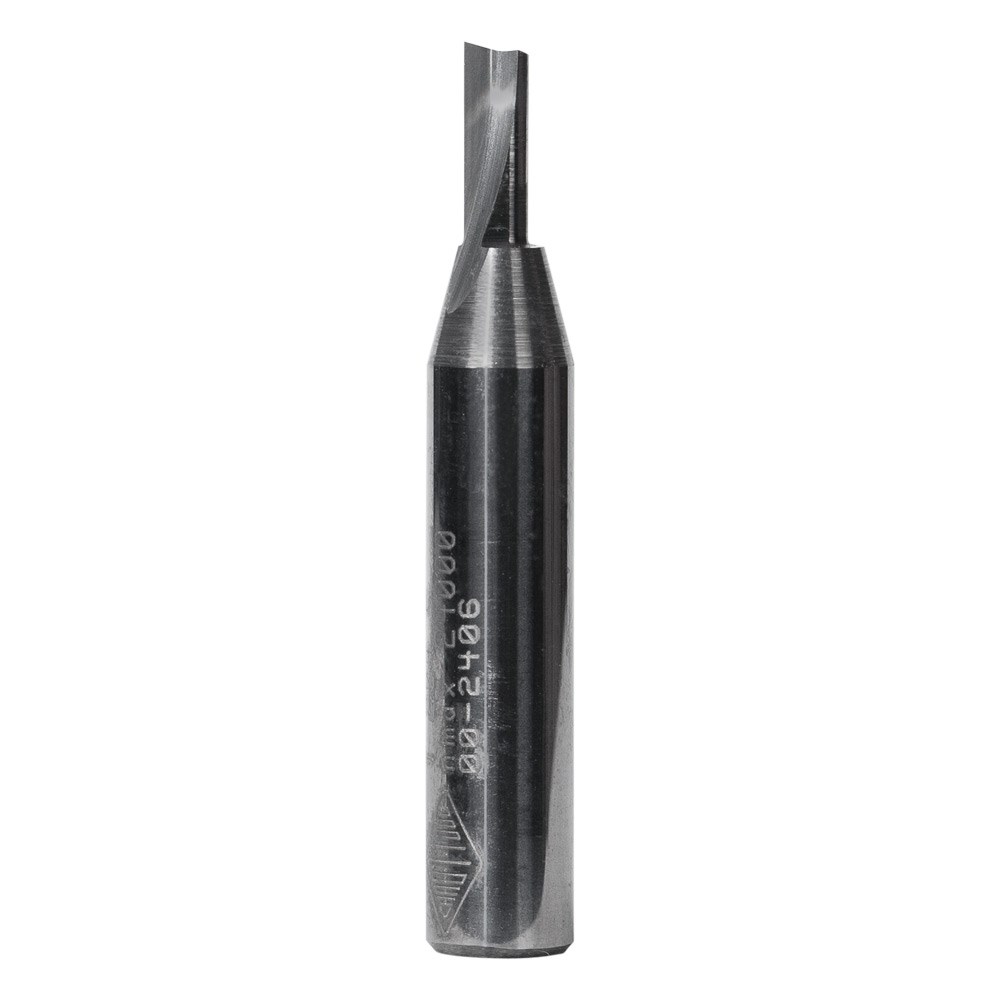
Example of a straight router bit.
Straight bits are one of the most useful general-purpose router cutter types. They create a straight-sided cutting path and are commonly used for grooves, recesses, mortices and other general routing work.
Diameter, cutting length, flute design and cutter material vary considerably, so choose the actual bit by the required cut rather than assuming every straight bit performs the same job. Browse AST's Straight Bits range to compare the available cutter styles and dimensions.
Flush trim bits
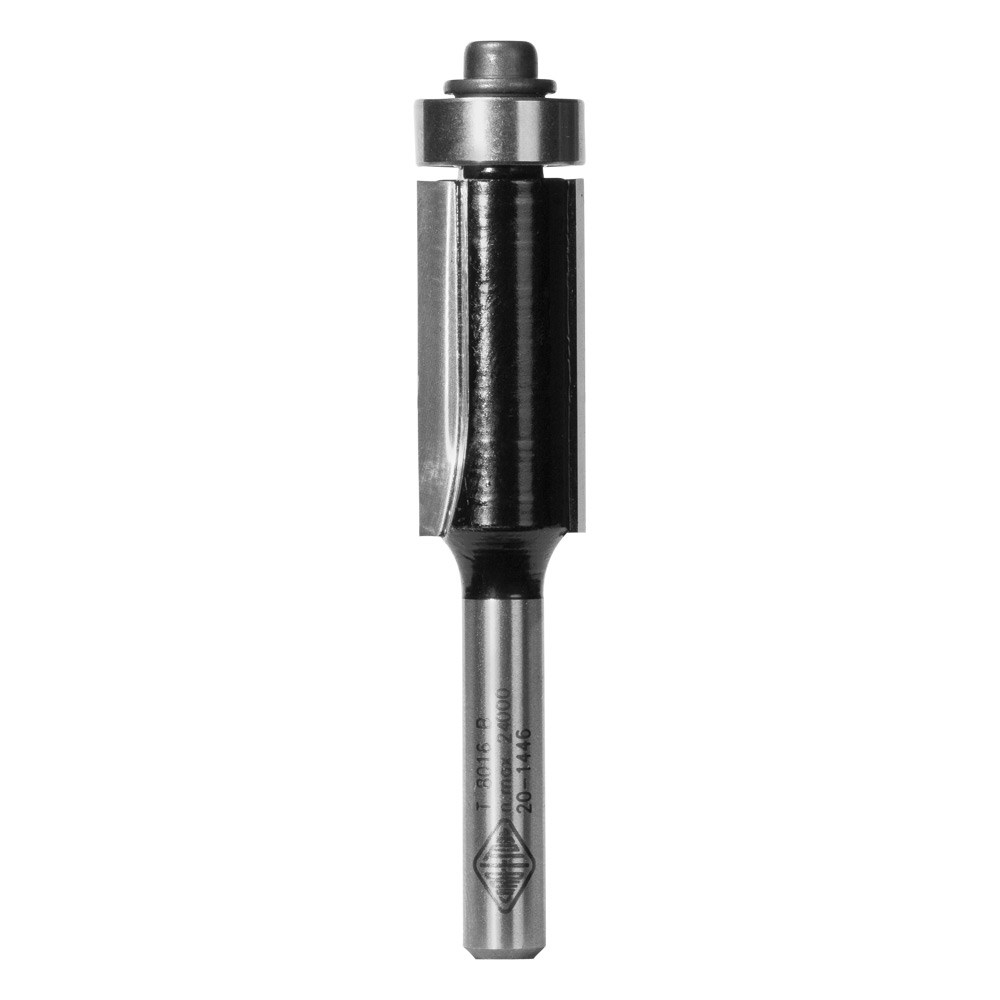
The guide bearing is clearly visible above the cutting edges.
Flush trim bits are designed to trim a workpiece to match an adjoining surface, finished edge or template. A guide bearing follows the reference surface while the cutting edges remove the excess material.
They are particularly useful for laminate trimming and template work. Bearing position and cutter geometry vary between designs, so make sure the configuration suits where your template or reference edge will sit. See AST's Laminate Trim Bits & Cutters.
Rebating bits
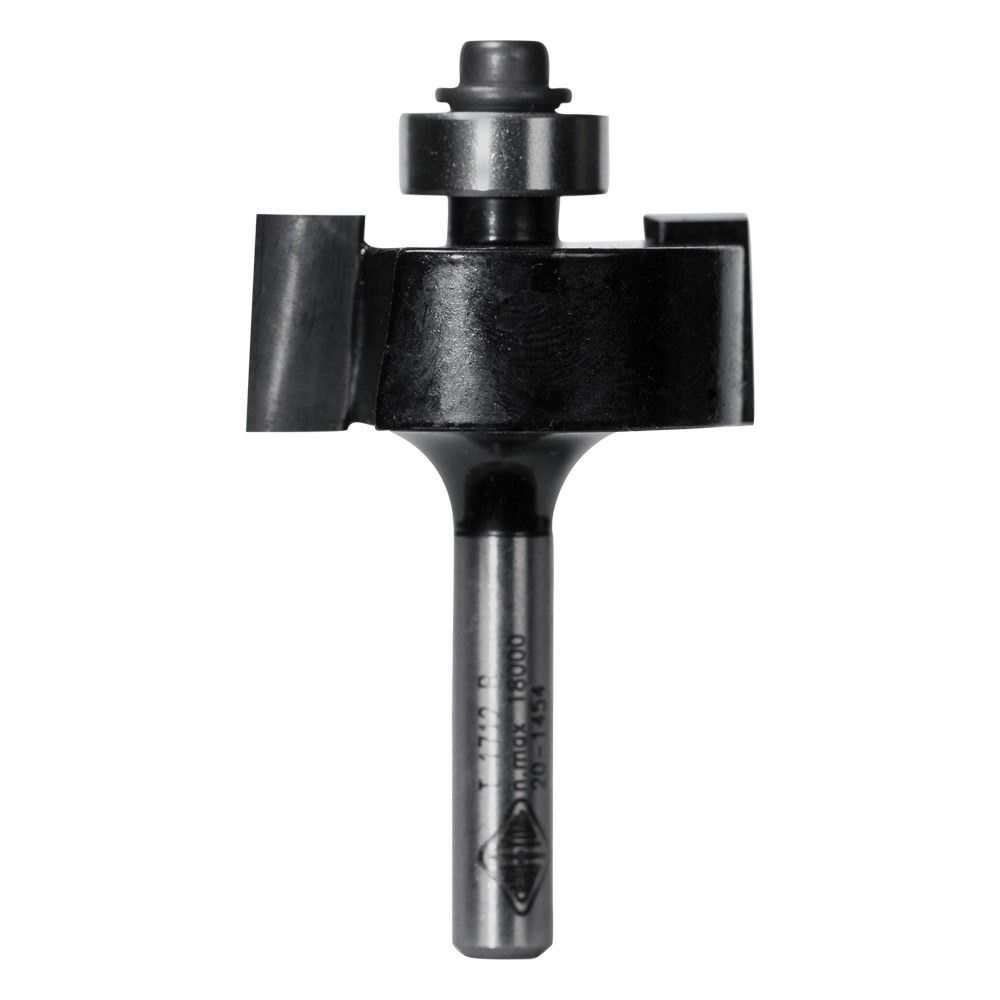
A rebating bit removes material from the edge to form a step or shoulder.
A rebate is a stepped recess cut along the edge of a workpiece. Common examples include picture-frame backs, cabinet components and other work where another panel, insert or component needs to sit into the edge.
Many rebating systems use a bearing to guide the cutter. The resulting dimensions depend on the cutter, bearing configuration and machine setup, so check the specifications rather than relying on appearance alone.
Chamfer bits
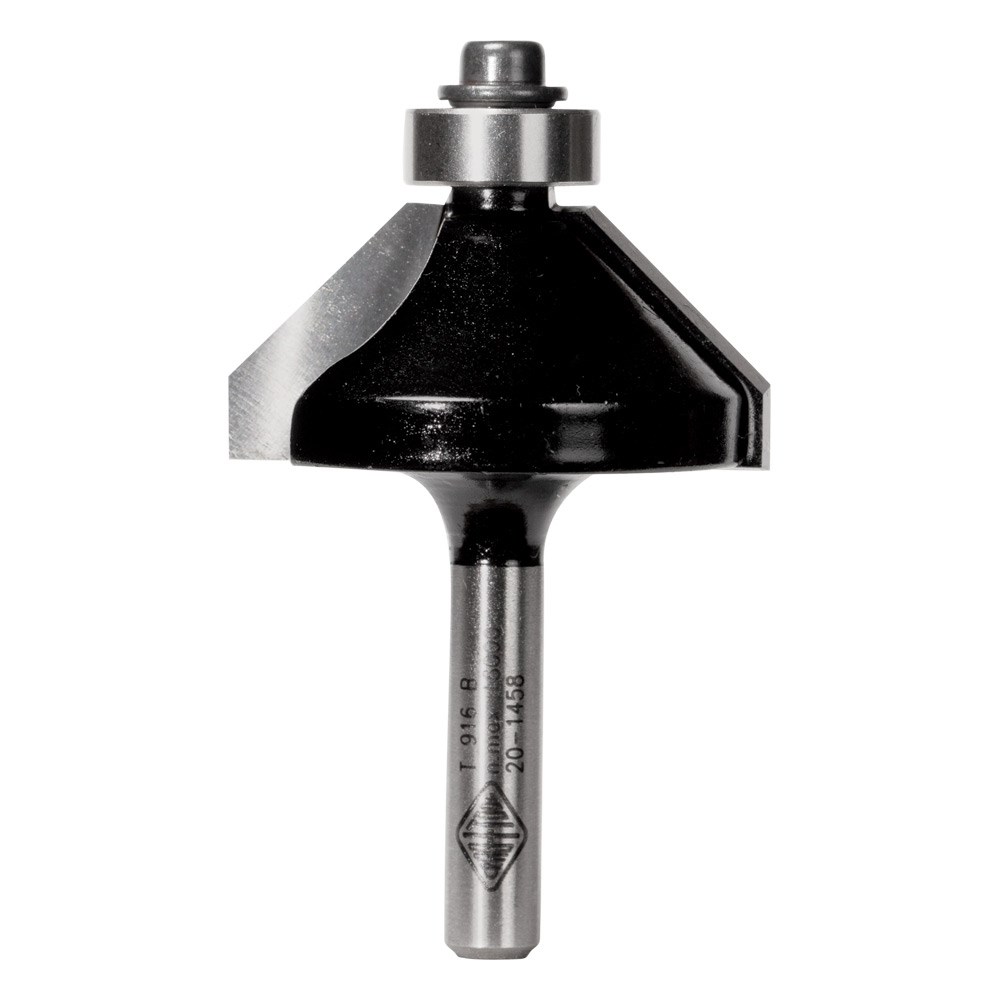
Example of a bearing-guided 45 degree chamfer bit.
Chamfer bits cut a bevel rather than leaving a square corner. They can be used to ease an edge, create a deliberate angled feature or form part of a decorative profile.
A 45 degree chamfer is common, but the correct angle and cutter size should always be selected for the required profile. Chamfering cutters sit within AST's Edge & Face Forming Bits range.
Rounding-over and edge-forming bits
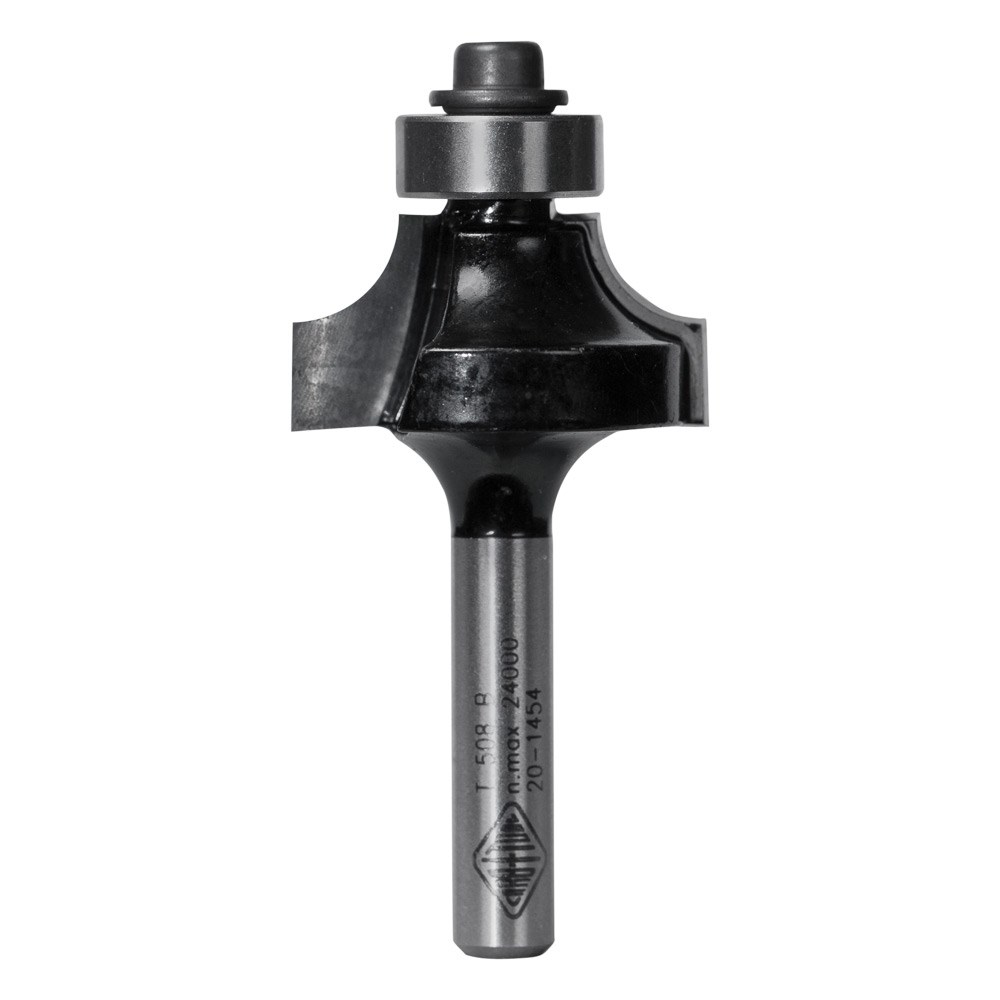
Rounding-over bits replace a square corner with a controlled radius.
Rounding-over bits are used when a square edge needs a smooth radius. Different cutter radii allow anything from a lightly eased edge to a much more pronounced rounded profile.
More broadly, edge-forming cutters cover profiles such as rounding over, beading, cove, ogee and other decorative shapes. Some are bearing-guided while other cutter and machine arrangements rely on a fence, template or other guide, so check the individual tooling design.
Decorative and specialised profiles
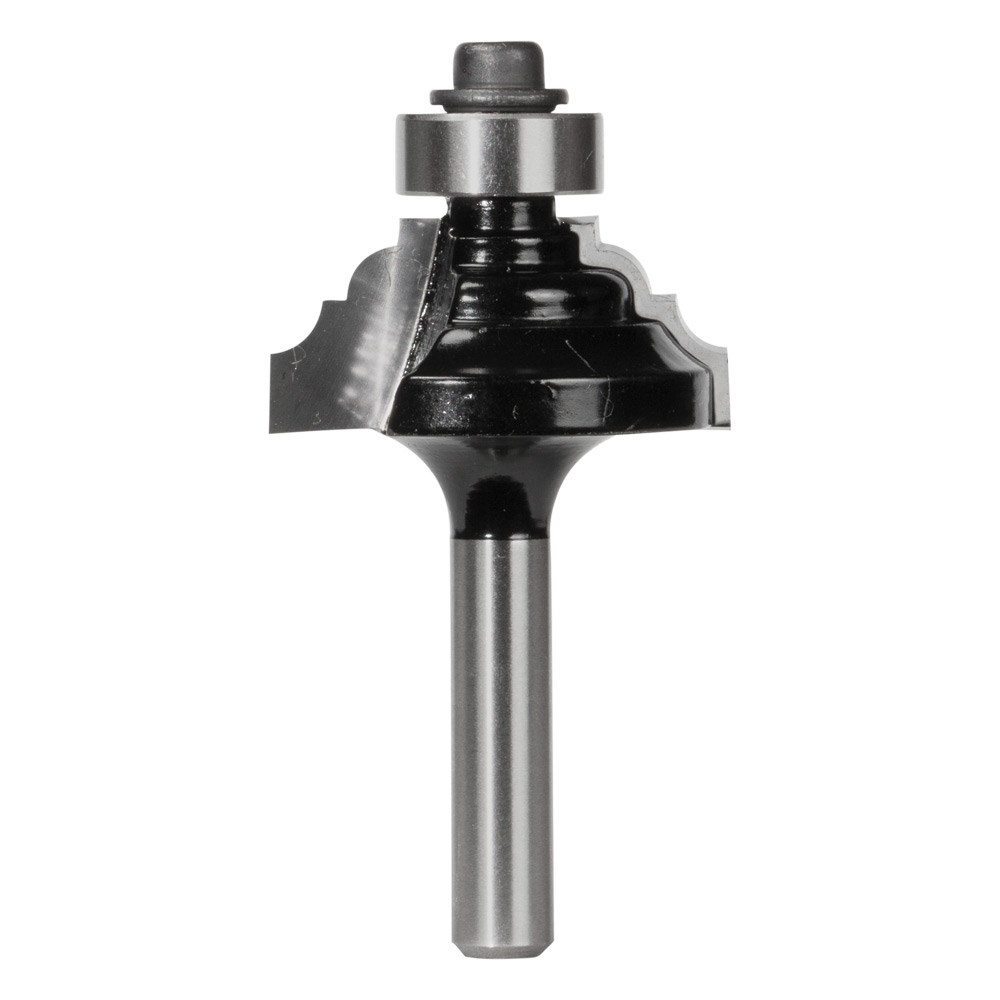
A classical cutter shows how multiple curves and steps can be built into one profile.
Profile cutters go well beyond basic rounding or chamfering. Classical, ogee, cove, beading, face-moulding and other specialist cutters can create repeatable decorative shapes in a single cutter profile.
These cutters are highly application-specific. Check the drawing, cutting diameter, cutting length, radius or profile dimensions, shank size and guiding method before ordering.
What about spiral, grooving and slotting cutters?
Once you move beyond basic straight-flute routing, cutter geometry becomes increasingly important. Spiral cutters can be configured to move chips and cutting forces in different directions, which can affect chip evacuation and the finish on different faces of the material.
AST carries dedicated Groove Forming Bits and Slotting Cutters & Assemblies, as well as straight and spiral cutter options.
If you're choosing between spiral geometries, our Upcut or Downcut Spirals guide explains how cutter direction can influence chip movement and surface finish.
Router bits for joints
Some router cutters are designed around a specific joint rather than a general cutting shape. Depending on the application, this may include finger joints, tongue-and-groove joints, drawer joints, mitre-lock profiles, panel-door tooling, window tooling and other specialised forms.
If the joint itself is your starting point, read our Guide to Joining Bits rather than trying to adapt a general-purpose cutter to the job.
How to choose the right router bit
- Start with the required cut. Decide whether you need a groove, flush edge, rebate, bevel, radius, decorative profile, slot or joint.
- Identify the material. Timber species, manufactured board, laminate, solid-surface material, plastic and other materials can place different demands on the cutter. Check that the selected tooling is suitable for the material.
- Check the shank and collet. The cutter shank must suit the router and correct collet specified by the machine manufacturer.
- Check all cutter dimensions. Cutting diameter, cutting length, overall length, radius, angle and other profile dimensions can all matter.
- Decide how the cutter will be guided. Depending on the bit and operation, this may be a bearing, fence, template, guide bush or machine-controlled toolpath.
- Check the cutter and machine requirements. Confirm the manufacturer's operating instructions and limits before machining, particularly with larger or specialised cutters.
A useful habit when ordering
Don't order from the cutter name alone. Two bits described as "straight", "rebating" or "rounding over" can have very different shank sizes, cutting diameters, cutting lengths and profiles. Match the actual specifications to your machine and required cut.
Common router bit selection mistakes
| Mistake |
Better approach |
| Choosing only by the name or photograph |
Check the complete dimensions and profile. |
| Assuming any shank will fit your router |
Confirm the router's approved collet and shank combination first. |
| Ignoring the bearing location |
Match bearing position to where the template or reference edge will be located. |
| Using the same cutter approach for every material |
Select cutter geometry appropriate to the material and finish required. |
| Continuing with a dull or damaged cutter |
Inspect tooling regularly and assess whether sharpening or replacement is appropriate. |
Can router bits be sharpened?
Router bits do not automatically need to be discarded when cutting performance declines. AST sharpens router bits as well as compression, finishing and roughing spiral cutters.
Whether a particular cutter is suitable and economical to sharpen depends on its condition, construction and remaining usable cutting material. If you're unsure, contact our sharpening team and have the cutter assessed rather than assuming it must be replaced.
Frequently asked questions
What is the difference between a straight bit and a flush trim bit?
A straight bit cuts according to the router's guided path and is commonly used for grooves, recesses and general routing. A flush trim bit uses a guide bearing to follow an existing edge or template so the adjacent material can be trimmed to match it.
What does the bearing on a router bit do?
On a bearing-guided cutter, the bearing follows an edge or template and helps control where the cutting profile sits in relation to that reference surface. Not every router bit uses a bearing.
How do I know what shank size I need?
Check the router manufacturer's specifications and the collet fitted to your machine. The cutter shank and collet need to be the correct compatible size.
Should I sharpen or replace a router bit?
It depends on the cutter's condition and construction. AST sharpens router bits and several types of spiral cutters, so a professional assessment can help determine whether sharpening is practical or replacement is the better option.
Need the right router bit for your application?
Browse AusTech's router tooling online, or speak with our team if you're matching a cutter to a particular material, profile, machine or production requirement. If an existing cutter is no longer performing as it should, we can also help assess your sharpening options.